
Douglas County VINELink Coverage
DGSO links Kansas VINE as its custody-status notification service. People can search through the web or call 866-574-8463. The service uses information supplied by participating agencies, so the result must identify the reporting custodian. For a DCCF booking, that can provide a useful custody event after the person drops from Douglas County’s current roster.
Kansas VINE does not replace DGSO’s release event, the court case, or KASPER. A status can say that someone was released or is no longer held by the reporting agency without explaining whether the cause was bond, time served, dismissal, transfer, or another event. State prison status should also be checked in KASPER, which covers people in KDOC custody and people released or discharged from Kansas correctional facilities since 1980.
Federal custody is outside the normal county and state path. Search the BOP Inmate Locator for a federal sentence. Use ICE’s locator and DHS VINE when immigration custody is plausible. A Kansas VINE custody change may mark the end of DCCF custody while the person remains confined elsewhere.
Search a Douglas County Inmate
Start from the DGSO custody-status notification page or the official VINELink search. Gather the person’s full name, date of birth, and the Douglas County identifier before choosing a result. The identifier is stronger than a name-only match.
- Open VINELink state selection and choose Kansas, or use the direct person-search entry.
- Enter the full name or the available offender identifier. Try known aliases only when the first search does not locate the person.
- Compare date of birth, identity details, and agency. Do not select the first same-name result without checking them.
- Open the matching record and read the custody status, reporting agency, and event date or time exactly as shown.
- Preserve the VINE or CHRI identifier. It will help DGSO locate the same booking if the online result needs confirmation.
- If no match appears, check spelling and identifiers, then call the VINE line or the facility. A no-result is not proof of release.
The official VINELink person search shows the current search interface used to locate a specific record.
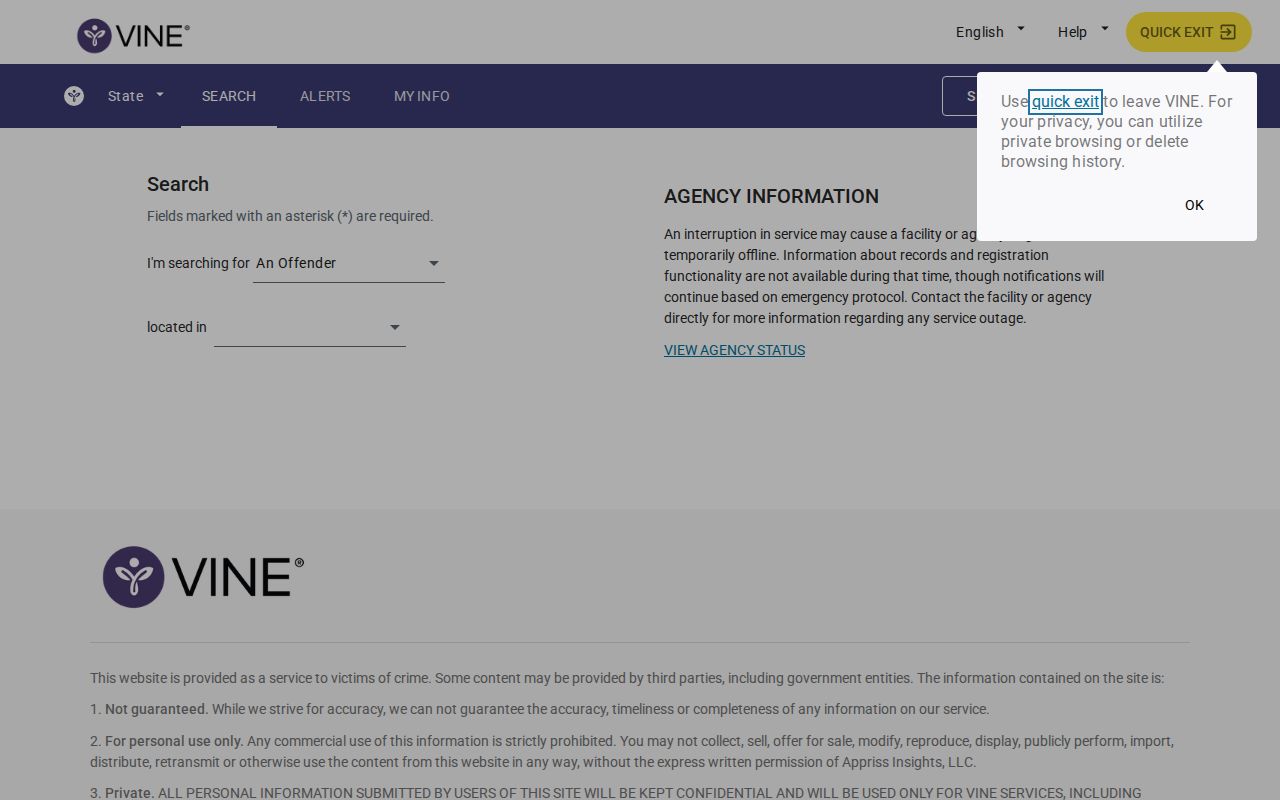
The displayed controls may change, so follow the live labels and offered search fields rather than relying on an old screen sequence.
Note: Keep the date and time of the search because custody data and notification options can change after an agency posts a new event.
Douglas County VINELink Result Fields
Field availability varies with the selected agency and record. The live result controls. The table describes how to read common data without assuming that every Douglas County result contains every line or uses identical release wording.
| Field | How to read it |
|---|---|
| Name and identity data | Confirm the correct person before relying on any status. |
| Offender or CHRI identifier | Connect the VINE result to the Douglas County booking reports. |
| Reporting agency | Shows whose custody information is being reported, not every possible custodian. |
| Custody status | Read the exact phrase, such as released or no longer in that agency’s custody. |
| Event date and time | Marks the reported status event when shown; verify its meaning with the agency. |
| Location or facility | May identify current placement or explain that custody moved rather than ended. |
| Notification options | Shows which delivery channels the current record and jurisdiction offer. |
Do not turn an event date into a release reason. A VINE alert can indicate a change while the court file supplies the legal order and DGSO supplies the operational release date, time, type, and destination. If transfer language or a new agency appears, the person may still be confined.
Does “not in custody” mean free from all custody? No. It can mean only that the reporting agency no longer holds the person.
Douglas County VINE Identifier Crosswalk
Douglas County provides an unusually useful local crosswalk. The same VINE Offender Identification or CHRI number appears under different labels in DGSO’s reports. Booking Recap calls it CHRI #. In Custody calls it Inmate #. Bond Amounts calls it Person #. Saving that value makes it much easier to match one record after a name disappears from the roster.
DGSO also warns that a person housed outside Douglas County may appear more than once in VINE. A second listing can reflect another facility, not a second person. Compare identity and agency data. DGSO says registration at every facility is not necessary, so avoid duplicate notifications unless the live system expressly directs otherwise.
- CHRI number
- The identifier displayed in Douglas County Booking Recap and used to strengthen a VINE match.
- Inmate number
- The label for the linked identifier in the current-custody report.
- Person number
- The corresponding label in the Bond Amounts report.
- Custodian
- The agency legally reporting or holding the person, which may differ from physical location.
A current roster location can be outside DCCF while the person remains in Douglas County custody. Search results should therefore be read as a set: identifier, agency, status, and event. Location alone does not establish release.
Register Douglas County Release Alerts
Notification choices depend on the live Kansas record and interface. Verified VINELink channels can include text, email, telephone, and in-app notices when the jurisdiction and record offer them. Do not assume that each match offers all channels or that Kansas requires the same confirmation method for each one.
- Find and verify the correct individual record using identity data, agency, and the Douglas County identifier.
- Select the notification or registration option displayed on that matched record.
- Choose one of the delivery channels currently offered for the record.
- Provide the contact details requested for the chosen channel.
- Complete the displayed confirmation. Enter or create a PIN only if the current telephone workflow asks for one.
- Retain the confirmation and update contact details through the live service when necessary.
The state-selection screen provides the official gateway into the current workflow.
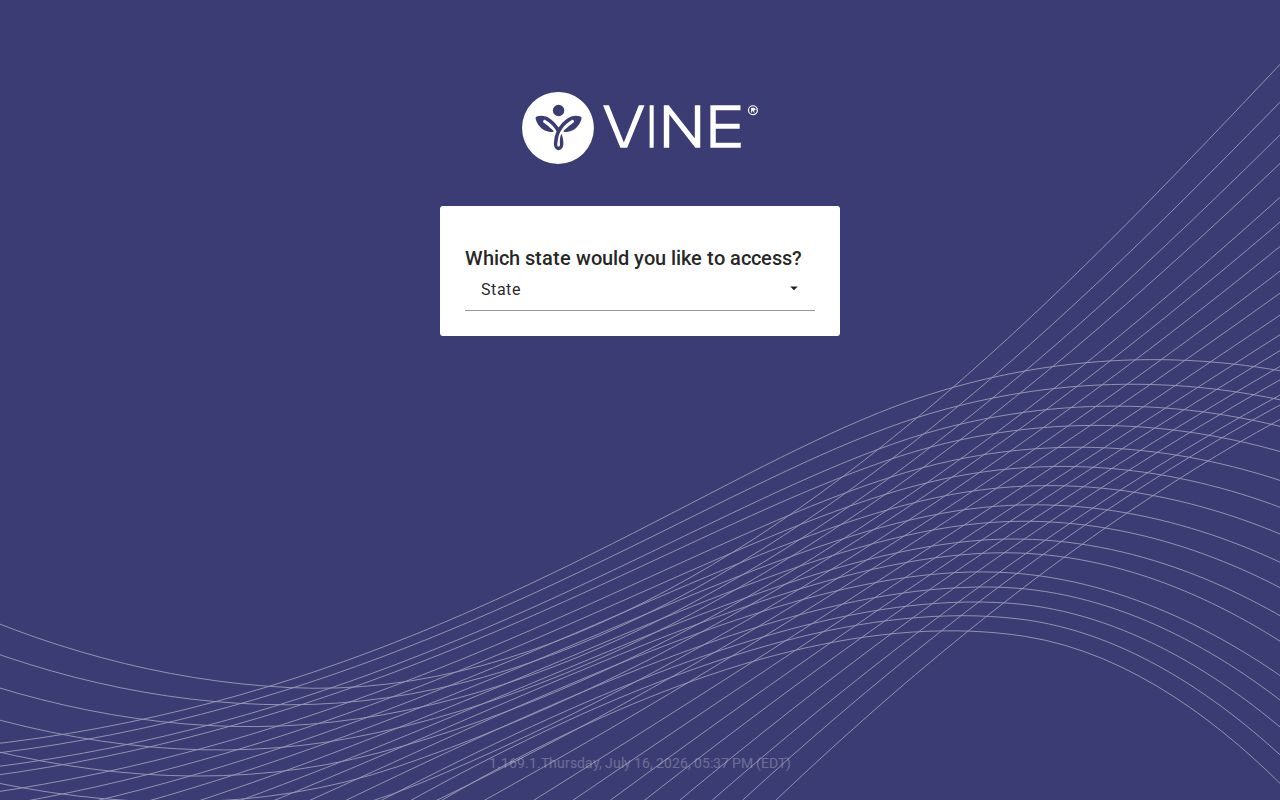
Continue into Kansas, match the person, and register only through the choices offered on that person’s record.
Note: A Kansas-specific PIN rule for every channel was not verified, so the live confirmation prompt should control each registration.
Confirm Douglas County Release Events
When VINELink reports a custody change, use the event as the start of verification. Call DCCF Corrections at 785-830-1000 with the booking and CHRI numbers. Ask whether Douglas County custody ended, the release date and time, and whether the destination was the community or another agency. Staff may limit what can be disclosed.
Next, check the court shown in Booking Recap. Douglas County’s Seventh Judicial District is separate from Lawrence, Baldwin City, and Eudora municipal courts. The case can show bond, dismissal, judgment, sentence, probation, revocation, or commitment. Yet even a release order does not prove the exact time jail processing ended.
If a sentenced person entered KDOC, use KASPER. Read custody or supervision status, location, sentence, and movement or release details together. “Released” from prison can involve parole or postrelease supervision. “Discharged” generally indicates the KDOC sentence relationship ended, but the exact record phrase and date must be preserved.
The full Douglas County released-inmate search adds record requests, old court files, KASPER, BOP, and ICE when VINELink does not settle the question.
Douglas County VINELink Limits
VINE is supplemental. Data can lag, an alert can be delayed or missed, and record language may not explain the reason for a status change. Douglas County’s public sources do not establish how long a Kansas released result stays searchable. They also do not establish that every release or transfer will use the same wording.
Kansas VINE is not the BOP locator. A federal pretrial detainee held for USMS may not appear as a sentenced BOP inmate. DHS also maintains a separate VINE interface for immigration custody. If DGSO says a person transferred to ICE, use the ICE locator, DHS VINE, the jail transfer record, and ICE ERO rather than declaring a community release.
The KBI Registered Offender Search is also a separate tool. It covers people with sex, violent, or drug registration duties under Kansas law. It is not a list of everyone released from DCCF or KDOC. No registry result says nothing about whether a general jail booking ended.
Douglas County VINELink Edge Cases
A quick bond case may show an old booking, a name missing from the next roster, and an own-recognizance order in court. VINELink can add the custody event, but DGSO still supplies the exact operational time. A bond payment or signed order alone does not prove that all holds and discharge steps cleared.
Another person may disappear from DCCF after sentencing and later appear in KASPER. That is a transfer to state custody, not a community release. Someone housed by another county may have multiple VINE entries while Douglas County remains the legal custodian. Match the CHRI crosswalk and agency before registering.
An immigration transfer creates another boundary. Kansas VINE can signal the end of county custody without establishing the person’s freedom. An ICE locator no-result can stem from processing delay, identity mismatch, short custody, transfer, or a protected record. Contact the responsible office when the systems do not align.
A roster update can create a fourth case. If a judge acts shortly before the next four-hour DGSO refresh, the person may still appear in In Custody while staff complete the event, or the old report may simply remain online. VINELink and Corrections can help distinguish pending processing from a posted release. Never promise departure at the time printed on a court order.
In every case, save the source, identifier, displayed status, and search time. That small record makes a later call to DGSO or KDOC clearer and keeps two similar names from being confused.